The Nordic Secret

Updated: Jun 19
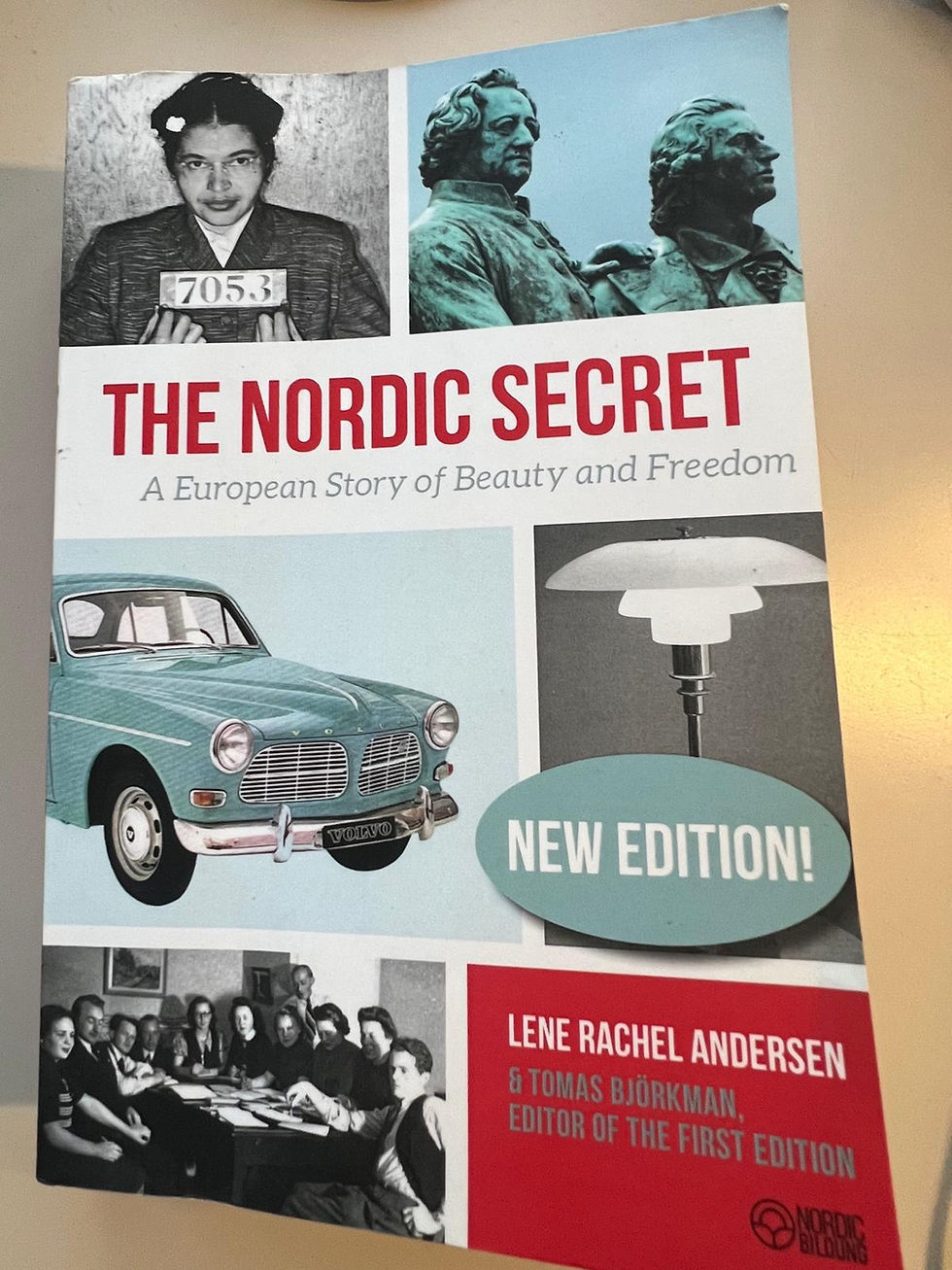
Now that I no longer live there, I promise I will desist from posting regular blog posts about Finland after this one. But current world events and the national conversation on education that is taking place here in Ireland spurs me to write about what has fascinated me for a long time. What is the core reason for what has made the Nordic countries so successful?
Shortly after I moved to Helsinki, after reading my first few blogs, my sister-in-law, Dr Caroline Crowley who is a researcher, loaned me her book The Nordic Secret to give me some insight. It's a very interesting read, with its central thesis that Bildung is essential for the future of humanity. Both Bildung and ego-development are understood to be a process as well as a result, and both words are used to imply that people grow, develop and mature through life through phases of increasing freedom. As we mature we develop an increased understanding of ourselves, of others and of the relationships between and among us. As our emotional depth grows, we can relate to others in deeper and more meaningful ways. This emotional maturing is fundamentally differrent from an intellectual maturing. The author Lene Rachel Andersen posits, Grasping the multitudes of emotions, agendas, hurt feelings, historical crimes and colonialism, devastating exploitation of nature, and the interaction of people, planet, production, profit, processes ... requires an enormous transferable and non-transferable knowledge and life-experience, i.e. bildung, and very few people have that, if anybody. But we can educate towards it.
In Scandinavia in the late 19th and early 20th century, key actors and activists understood that the world was developing rapidly, and that the population had to develop too. They created a new type of education that created remarkable results. Young people were educated to develop a civic sense of self and were encouraged to become individuals with a personal voice with something to say, persons who wanted to do what was good for themselves, their local community, their country and the world.
As for Finland in particular, it was part of Russia for about 100 years and its independence only came about after a civil war in 1918. It also suffered horribly during World War 2. It was the poorest of the Nordic countries per capita throughout the 1800s; only from 1920 on did things radically change. After its independence Finland went through a very rapid industrialisation and democratisation process. The speed with which Finland made the climb to becoming one of Europe's richest countries is noteworthy. There was a deliberate agenda to target the cultural, intellectual, moral and emotional cultivation of young people and, particularly, the least educated in the population. The author of this book theorises that it focused on four aspects:
unfolding that which is unique to each person
letting them pursue knowledge they find exciting and useful
allowing them to feel a sense of belonging in and responsibility towards the nation and the wider world
helping them to develop their own opinion and path in life.
No country is perfect and the author decries and laments more recent moves, even in the Nordic countries, towards learning goals and testing, which has shifted the focus from the children to the goals. As the world becomes increasingly complex, there is a danger we are making education increasingly narrower and producing test-savvy young people. There is a mental health crisis among our youth, some of which may be ascribed to the higher focus on test results plus the influence of social media. In the future, for democracy to work, our young people need to become self-motivated, be able to think for themselves and, above all, find life meaningful and worth living.
If you have an interest in the ideas proposed in the book, you can get more information at the Global Bildung Network.
In the Irish context, we currently have a unique opportunity to get it right for our future generation. My previous boss in the National Council for Curriculum and Assessment (NCCA), Professor Anne Looney, has been appointed chair of the Convention on Education and National Conversation and I am sure she will do brilliantly in the role. Her interview on RTE Radio 1 this morning with David McCullagh gives me great hope for the process. Another of my previous bosses in the Irish National Teachers' Organisation (INTO), Catherine Byrne, is a member of the Secretariat and there is nobody who is more knowledgable and skilled at listening to the views and concerns of the stakeholders in education and distilling the issues. The formal work of the Convention commences this weekend in Athlone, the first of four weekends they will meet during 2026. I wish them well in their difficult but vital task.
My Writing Life
I was delighted to be interviewed by Teresa Quinn of Liffey Sound Radio on her programme Bookline which aired on the 1st of March. We had a great discussion on my early influences, how I approach my writing and some of the storylines and characters from my latest book, Love, Lycra and Tattoos. You can listen back to the podcast here.

This week, the highlight so far was meeting with the mighty women of The Orchard Book Club this morning and discussing my book with them. Among other topics, they asked me about the sources of my inspiration, my writing processes and we talked about how and what they generally read. The book club is going strong since 2005 and two of the founding members are still involved. A huge thanks to them for selecting my book to read this month out of all the books in all the world! It was an honour and a delight to meet with you all.
Another piece of lovely news is that my sister Aileen Sheehan had her first published piece of prose included in the St Patrick's Day edition of Ireland's Own magazine. It was a memoir piece about the gift of reading given to her (and, indeed, to the five of us) by my mother and the importance of Sinéad De Valera's book The Magic Girdle in Aileen's childhood. It is a stunning piece of memoir and I can only hope Aileen sticks at this writing lark as there will be no stopping her!
I too had my short story Adult Education feature in this current week's edition of the same magazine as the runner-up of their annual short story competition. A strange but wonderful coincidence.
And What About Jessie Buckley?
I can't finish without congratulating the beautiful and talented Jessie Buckley from my native Killarney for her incredible achievement at winning the Oscar for Best Actress in Hamnet. I am always nervous going to films of books that I have loved, but in this case, I should not have worried. Jessie was superb in the lead role.
My late dad and Jessie's grandfather, the late Pat Buckely, were bridge partners and great friends back in the day. In 2018, when Jessie featured in one of her first films Wild Rose, I accompanied Dad to Tommy Cooper's cinema in Killarney to watch it. Dad really enjoyed it and remarked on how proud of her her grandfather would have been. In his wildest dreams, I don't think he could have imagined the global acclaim she has now achieved for her abilities, talents and natural beauty, both inside and out. Congratulations to Jessie and, of course, to Tim, Marina and all of the Buckley family. Tim is an accomplished poet and I look forward to him waxing lyrical about this wonderful chapter in all their lives.


https://xosoplus.mobi/soi-cau-xsdn.html mình ghé thử cho biết vì thấy mọi người hay nói tới, kiểu vào xem họ làm trang ra sao thôi. Ấn tượng đầu là bài được xếp theo ngày khá dễ theo dõi, nhìn tiêu đề có mốc 15/07/2026 là biết đúng kỳ mình cần, khỏi phải kéo tìm mệt. Mình cũng thích cái đoạn họ để “bảng chốt số” thành khối riêng, chữ số canh hàng gọn gàng nên liếc cái là hiểu đang nói gì, không cần đọc lan man. Cuộn xuống dưới thì phần kết quả kỳ trước trình bày theo cột rõ ràng, nhìn các giải tách dòng thẳng hàng nên dò nhanh đỡ rối, nhất là cái bảng kết quả xổ số Đồng…
bongdalu 808 hôm bữa mình lướt thấy bạn bè nhắc nên tiện tay mở thử cho biết thôi. Mình không kiểu ngồi phân tích kèo hay đọc hết tin, chủ yếu xem họ bày bố giao diện ra sao. Cảm giác đầu tiên là phần tỷ số trực tuyến nhìn gọn, các khối thông tin tách rõ nên kéo xuống không bị hoa mắt. Với lại cái menu “Tin Bóng Đá” và “Tỷ số trực tuyến” để ngay chỗ dễ thấy, bấm qua lại cũng nhanh. Nói chung trang này thiên về hiển thị dữ liệu cho người xem lướt, chữ với cột canh khá ngay ngắn. Mình thích nhất là mấy box kết quả lịch thi đấu hiện theo…
keonhacai 5 hôm trước mình thấy mấy ông bạn share nên tiện tay vào lướt thử cho biết. Mình không ngồi đọc kỹ từng bài hay soi kèo gì đâu, chủ yếu xem giao diện có dễ nhìn không. Cảm giác đầu tiên là trang chia khối khá rõ, kéo xuống không bị ngợp chữ, nhìn phát biết chỗ nào là nhận định, chỗ nào là video. Mình có thấy họ đang để bài Stjarnan vs Valur (02h15 ngày 18 07) nổi bật nên bấm thử, tiêu đề to và phần nội dung xuống dòng gọn gàng. Mấy mục chính ở trên gom lại hợp lý nên tìm nhanh, không phải mò lâu, nhất là cách họ tách từng khối…